Author Archives: J Christian Adams

Chicago voter fraud sentence

A Cook County judge has sentenced two men to prison for voter fraud.  More in the Chicago Tribune.

They would “target primarily Indian and Pakistani voters and coax them to take absentee ballots, prosecutors said.  At least one woman, Hema Panchigar, who isn’t registered to vote, testified in November that Eapen filled out her ballot.  She signed the ballot, as did all her relatives, but said during the drawn out bench trial, ‘I didn’t mark anything.'”

More on the Georgia retreat by Justice

As noted here, the Justice Department ordered a full retreat on the Section 5 objection to Georgia’s plan to verify that only citizens end up on the voter rolls.  The Justice Department had blocked the plan in May 2009 using Section 5 of the Voting Rights Act.  Georgia decided to sue in U.S. District Court in July 2010 after more than a year of back and forth that got the state nowhere.  After the lawsuit was filed by Georgia, Justice blew a full scale retreat and was willing to preclear the nearly identical plan. 

A couple of documents:

Here is the preclearance letter.   This was forthcoming after the lawsuit was filed.

Here is the joint motion to dismiss.

A couple of lessons for other jurisdictions:

Lesson One.  The Voting Section at Justice simply does not want to be forced to defend the constitutionality of Section 5 of the Voting Rights Act.  Their nightmare scenario is to have multiple (6 or more) full scale defenses taking place in the context of Section 5 preclearances.  The Voting Section, at least right now, is ill equipped to handle a large volume of complex constitutional defenses.  At a minimum, it will stymie their aggressive offensive agenda.  Moreover, there is a very thin supply of defense oriented legal talent currently in the Voting Section.  One can count on one hand the number of lawyers who have significant defensive experience in a private litigation practice.  Their strength is offense.  And when lawyers for states and municipalities force DOJ to play defense, with so much on the line, they benefit their client greatly. 

Lesson Two.  It pays for jurisdictions to fight back aggressively in voting cases.   The State of Georgia pulled back the curtain and found the objection wasn’t so great and powerful after all.  Georgia won.

Lesson Three.  Go to court and bypass DOJ on Section 5 submissions.   A federal judge will give you a more impartial hearing.  The more states and municipalities that go directly to federal court, the more likely plans and changes will be precleared.  

Lesson Four:  The original objection was made by Acting Assistant Attorney General Loretta King in May of 2009.  She is the same person who ordered the dismissal of the New Black Panther case.

Justice monitoring elections in Indian Country

The Department of Justice has announced that it is monitoring elections in Arizona today regarding the Navajo and Apache languages.  The release notes this is federal observer coverage (OPM).  That means that teams of federal observers under the control of OPM (not DOJ) will be sent into these areas to record events surrounding the elections.  DOJ attorneys will manage and review observer reports prior to being finalized.

This raises an interesting issue regarding Indian languages under Section 203.  I recently heard Sara Frankenstein note that many Indian languages are trending toward obsolescence.  That is, only the oldest of the native speakers use the language at all, and most of them already understand English.  She noted an interesting event.  At one recent election in South Dakota, there was an election for tribal issues as well as a state election.  There were separate tables for each election.  Tribal voters who went to vote in the tribal election had one choice in the election run by the tribe – a ballot in English.  The tribal election was not conducted in the tribal language.  Right next to the tribal election table, the same voters could vote in the state election, where, under Section 203 of the Voting Rights Act, ballots had to be offered in the tribal language as a matter of federal law.  Again, in the tribal election, no ballots were offered in the tribal language, but in the state/federal election in the same location, federal law required tribal language ballots.

There seem to be two issues here.  First, how long should Section 203 mandate use of a dying Indian language?  A subset of this question is: what are the appropriate levels of federal resource allocation to monitor or litigate matters involving languages approaching obsolescence?  Second, could the resource issue be informed by looking at how much of a priority the tribe itself places on having ballots in a tribal language?  At least in the case discussed by Ms. Frankenstein, it appears to be zero priority. 

Justice retreats on Georgia objection

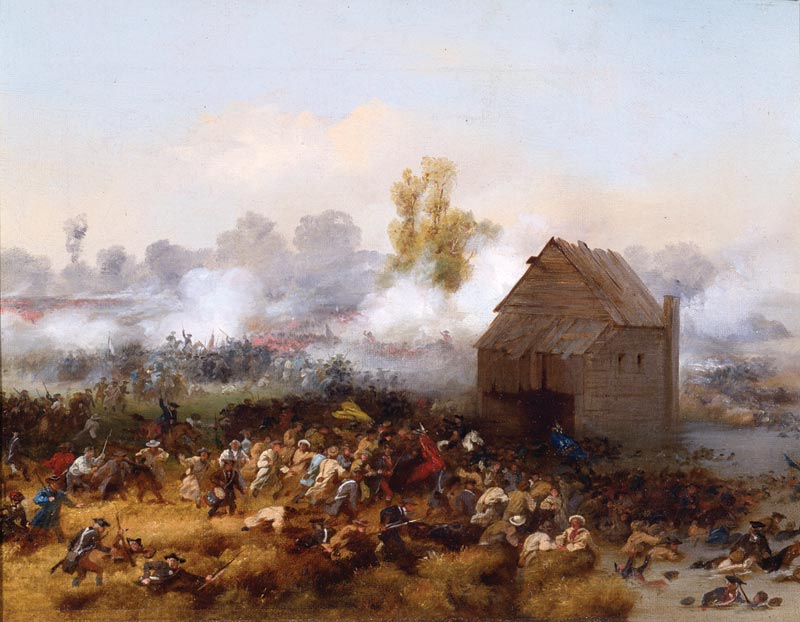
Like the Continentals fleeing Brooklyn Heights the Justice Department has retreated from the objection to Georgia’s plan to ensure that only citizens are allowed to register to vote.  The Atlanta Journal Constitution has more.

This was a bad objection in the first place, and someone finally got involved who understood it and blew the retreat. 

Another explanation for the retreat is that it pays to fight back.   The DOJ objected in May 2009 to Georgia’s plan to verify citizenship of voter registrants.  Dickering and more dickering characterized the next 13 months – until Georgia fought back and sued in July 2010.  It shows that with Section 5 objections, states should bypass the Department and go straight to United States District Court where usually sound jurists will determine the outcome in the light of day, and not behind closed doors.  Jurisdictions should understand that Georgia probably spent less to file the lawsuit to obtain preclearance than they did dickering for 13 months.

A side note to the retreat, then-Assistant Attorney General Loretta King interposed this objection a few days after she ordered the dismissal of the New Black Panther case. 

Fox article on military voting and states seeking waivers

Fox had multiple stories Sunday.  Here is one.

“Also on America’s News HQ, Eversole called out Secretary Buescher and the efforts of his underlings, suggesting that the Centennial State isn’t giving it their all. “We’ve got to find a better excuse or reason not to comply with the Move Act than the fact that it takes 15 days to print ballots,” Eversole said, visibly exasperated. “Walk down to Kinkos, put it in the copier, print them, and get them to troops so they have time to vote.””

Senator John Cornyn spoke about efforts to keep the waiver process secret within the Department of Defense and the Department of Justice:

“I worry because there is not the kind of transparency that we can judge for ourselves whether it’s being used as an excuse to block military voting or whether there are legitimate problems,” Sen. Cornyn told Fox News. “If there are legitimate problems then we want to work to try and overcome those obstacles not maintain them.”

The fact is that the higher ups in the Pentagon are ordering that the process be kept secret because of how embarrassing this may be to the adminstration if any waivers are granted.  The plan is to grant some waivers before the public has time to scrutinize the merits of any of the waiver requests.  The Justice Department is also planning to keep its report on the waivers secret.  That way the public will not be able to judge the merits of the DOJ advice and also the level of zeal Eric Holder has in protecting military voters.   Unless the public demands transparency and accountability, don’t expect anything to change.

Weekly Standard on spanish ballots in Cuyahoga (OH)

The Weekly Standard has an article  about a place who may be sued by the DOJ, Cuyahoga County near Cleveland, for not using Spanish language ballots.  Two important points:

1. Perhaps the article understandably doesn’t capture the nuance of the situation, but I am flabbergasted that no “notice letter” was sent to the county.  Notice letters have been standard procedure at the Justice Department for over a decade at least.  A notice letter is a formal notification than a lawsuit has been authorized and an invitation for negotiations.  The article states: “When queried as to why they could not receive documentation of the department’s concerns in writing the county officials were told that the department ‘didn’t want to create a public record.'”  If the adminstration has truly dispensed with the notice letter, this is staggering.  It is akin to a visit “asking” if you want to put a cigarette machine in your storefront.  The notice letter usually summarizes the legal basis for a lawsuit.   Reporters, and Congress, should follow up aggressively and demand to know why the Voting Section did not use a notice letter in Cuyahoga and instead engaged in an odd exercise of secret, shall we say, suggestion.

2. I also want it to be clear that the 4e triggers are almost certainly LOWER than the regular Section 203 triggers for Spanish language in places like Harris County Texas or Miami Dade.  Because it is Puerto Rican citizens, the law is different and there is no doubt there is likely some legal obligation.  The questions are, however, how much obligation and how is the obligation met?

Military Voting: Myth vs. Reality

An organization that once upon a time aggressively sought to protect overseas voters has published a defense of lax enforcement of overseas voter protections.   Here is a point by point separation of myth from reality.

Myth:

The primary problem for many of these states is the need to send out ballots 45 days before the election. The states seeking waivers have repeatedly complained that their states’ late primaries make it extremely difficult to send out ballots on time.


Reality: 

While legislative action may be difficult, this is one issue that should transcends politics and partisan bickering.  It is not too much to ask the legislatures to find the will to change voting practices and election calendars that in place leave thousands of people out of the process or result in throwing their ballot away.  Local election officials are patriotic hard working servants for the people who will undoubtedly utilize the latest technology to meet deadlines, even tight ones that require long days and nights of work.  However, they can only do so much within the confines of state law before the statutory language must be changed to allow our overseas and military the full opportunity to vote.  Unlike OVF, here you will find none of the sympathies exhibited towards state legislatures with late primary dates.  Anyone who knows anything about late primaries knows the fundamental reason entrenched politicians love late primary dates is that it adds just one more level of incumbent protection.  This self- interested reason is similar to those arguments offered by those politicians who fought for decades to maintain runoff elections even though it would similarly disenfranchise the military.  In the balance of things, that corrupt interest of incumbent protection should not outweigh the interest of allowing enough time that all overseas and military voters can return their ballots in time to be counted.  Therefore, the status quo is not acceptable and the “difficult problem” should be remedies by the state legislature in question. 


Myth:

Many of these same states, however, are also launching electronic blank ballot delivery methods that speed up the voting process by providing the ballots significantly faster and thus ensure that voters still have enough time to vote.

Reality:

While it is laudable that states are complying with the MOVE Act by launching blank ballot delivery systems developed by OVF, this feature does not help those military voters that may not have access to email or OVF’s website.  There are many many thousands.  Instead, those voters must rely on the postal service for enough time to vote just like millions of Americans.  OVF is an interested vendor for many of the states now struggling with MOVE Act compliance.  OVF maintains costly contracts with many of the same states now requesting waivers from the MOVE Act, in an effort to find alternative ways to send ballots.  Of course for those voters utilizing the OVF technology, all 45 days may not be needed.  However, the law requires 45 days and not all voters have access to the OVF website.  The military voters in remote areas, battle zones, and onboard ships or submarines may not be able to receive their ballots by email and still rely on regular postal mail for the transit and return of their ballots.   


Myth:

Alaska allows email transmission of the registration form, ballots to be faxed back and counts votes delivered up to 15 days after the election.


Reality: 

The use of facsimile as a means of transmission of ballots is obsolete and no longer commonly used.  Fax machines are not available in any broad terms to overseas military units.  Again, while the use of electronic means will undoubtedly help some, it doesn’t help those citizens or military without access.  Back to fundamentals:  where else in the voting rights granted to Americans is access to the ballot conditioned on access to the internet.  You know the answer.   

Myth:  Additionally, it is important to note that the process for requesting the waivers is provided for by the Act itself. States requesting waivers are still in compliance with the law. Legislators recognized in October 2009, that a year may not be enough time to implement all of the changes necessary. Thus, waivers were made available as a temporary alternative during the 2010 election and allow states the time needed to plan improvements.  2010 election and allow states the time needed to plan improvements.


Fact: Just because the option to grant a waiver does not mean the grant of the waiver should be presumed.  October 2009 was plenty of time to comply with the law for all of the states now seeking waivers.  If any grants of waivers are made, there will be solider and sailors who will suffer and lose their right to vote in those states, period.


Myth:

Critics underestimate both the challenges of passing election laws in individual states and the considerable effort that most states have put into passing laws related to MOVE Act compliance


Reality:   A detailed waiver process was placed in the MOVE Act for states that have a late primary date which would cause an undue hardship on the state to send ballots to overseas and military voters 45 days prior to the election.  The waivers and necessary plan to ensure sufficient time would be submitted for approval prior to each election and would not be approved repetitively.  Without the pressure of Senator Cornyn, the Department of Justice was considering open-ended waivers for multiple elections.  In response to his advocacy, the DOJ clarified to the Senator in a letter that the state waiver request would be required for each election.  It would be nice to have OVF advocate on these issues.  The waiver must meet specified criteria in the law and the state must provide a plan with alternative means of gaining additional periods of time to provide for the necessary sufficient time for transmittal by mail.  Most studies have found that 45-60 days are required to send ballots to and from the front line.  The 30 day window advocated for years by Department of Justice mid-level managers has been thoroughly discredited and forcibly changed by the Congress.  Under federal law and court interpretation, each state must insure there is sufficient time for each overseas and military voter to return the ballot in time to be counted or their rights have been violated.


For many of the states, the legislatures either refused to pass legislation – see Wisconsin and Alabama.  Some states like Maryland and Colorado either refused to bring up the issue, ignored the issue altogether, or decided on a waiver request even prior to the Legislative Session as the easy way out rather than debating the issue.  While Washington DC passed a comprehensive election reform bill that included pre-registration of 16 year old and electronic transmission of ballot, they failed to enable enough time to provide for 45 days.    A large number of states including Vermont, Missouri, Illinois, Louisiana, Florida, and Minnesota appeared to have passed legislation to change their primary date or generally conform their laws to the MOVE Act.   Unfortunately, the track record exhibited by state legislatures can provide no assurances that the waiver states will see the light in 2011 and pass legislation to conform to the MOVE Act.  In the meantime, military voters will be disenfranchised in the thousands. 


OVF should use its considerable resources to advocate on behalf of military and overseas voters.  The organization was created to represent them and not to make excuses for stumbling or deadlocked legislatures or go to bat for a timid DOJ while states hide behind non-legitimate reasons such as incumbency protection for not addressing the MOVE Act. 


Myth: The question of the 45-day window is important and the Department of Defense, FVAP, and Department of Justice must certainly insist on full compliance with the MOVE Act in due course, but other important policy initiatives that states have made should not be ignored.


Reality:  In fact, the question of a 45 day mailing window is paramount and fundamental for most overseas and military voters.  That is why it is the foundation of the MOVE Act.  One must seriously ask what exact other policy initiatives on the state level would be ignored by Legislatures by acting upon legislation that allowed for compliance with the federal MOVE Act.  Changing the distance from shore that one can shoot ducks in Maryland?  For those remote military and overseas citizens, what more important issue, other than ensuring enough time is available, should have priority – pre-registration for 16 year olds.  OVF insists on full compliance only “in due course.”  One should ask how many more tens of thousands of votes should be thrown out for lack of time to return ballots before a state should feel obliged or shamed into finally legislating on this issue. OVF, support local election officials and stop making excuses for state legislatures.