Polling data on potential election reforms

Cal Tech/MIT has published a report on the public support, or lack thereof, of various election reforms.  You can read the full report here.  Here is the important paragraph:

“We find that 57.5% of respondents support making Election Day a holiday but only 41.8% support the notion of moving Election Day to a weekend. The final two election reforms are received with the least enthusiasm. Absentee voting over the Internet was supported by roughly a third of the sample (30.1%), and voting by mail received even less support, 14.7%.”

One wonders what the cross tabs would be on the Election Day as a national holiday would be if public sector workers were not part of the sample.  Most businesses would not close on a national election day, but governments would.  This, of course, would also have a impact on election results with public sector employees getting a day off and most private sector employees still having to go to work in places like hospitals, factories, diners and gas stations.  But one thing is for sure, voting by mail is a dead letter, and internet voting gets hardly any more support.

Chicago voter fraud sentence

A Cook County judge has sentenced two men to prison for voter fraud.  More in the Chicago Tribune.

They would “target primarily Indian and Pakistani voters and coax them to take absentee ballots, prosecutors said.  At least one woman, Hema Panchigar, who isn’t registered to vote, testified in November that Eapen filled out her ballot.  She signed the ballot, as did all her relatives, but said during the drawn out bench trial, ‘I didn’t mark anything.'”

More on the Georgia retreat by Justice

As noted here, the Justice Department ordered a full retreat on the Section 5 objection to Georgia’s plan to verify that only citizens end up on the voter rolls.  The Justice Department had blocked the plan in May 2009 using Section 5 of the Voting Rights Act.  Georgia decided to sue in U.S. District Court in July 2010 after more than a year of back and forth that got the state nowhere.  After the lawsuit was filed by Georgia, Justice blew a full scale retreat and was willing to preclear the nearly identical plan. 

A couple of documents:

Here is the preclearance letter.   This was forthcoming after the lawsuit was filed.

Here is the joint motion to dismiss.

A couple of lessons for other jurisdictions:

Lesson One.  The Voting Section at Justice simply does not want to be forced to defend the constitutionality of Section 5 of the Voting Rights Act.  Their nightmare scenario is to have multiple (6 or more) full scale defenses taking place in the context of Section 5 preclearances.  The Voting Section, at least right now, is ill equipped to handle a large volume of complex constitutional defenses.  At a minimum, it will stymie their aggressive offensive agenda.  Moreover, there is a very thin supply of defense oriented legal talent currently in the Voting Section.  One can count on one hand the number of lawyers who have significant defensive experience in a private litigation practice.  Their strength is offense.  And when lawyers for states and municipalities force DOJ to play defense, with so much on the line, they benefit their client greatly. 

Lesson Two.  It pays for jurisdictions to fight back aggressively in voting cases.   The State of Georgia pulled back the curtain and found the objection wasn’t so great and powerful after all.  Georgia won.

Lesson Three.  Go to court and bypass DOJ on Section 5 submissions.   A federal judge will give you a more impartial hearing.  The more states and municipalities that go directly to federal court, the more likely plans and changes will be precleared.  

Lesson Four:  The original objection was made by Acting Assistant Attorney General Loretta King in May of 2009.  She is the same person who ordered the dismissal of the New Black Panther case.

Justice monitoring elections in Indian Country

The Department of Justice has announced that it is monitoring elections in Arizona today regarding the Navajo and Apache languages.  The release notes this is federal observer coverage (OPM).  That means that teams of federal observers under the control of OPM (not DOJ) will be sent into these areas to record events surrounding the elections.  DOJ attorneys will manage and review observer reports prior to being finalized.

This raises an interesting issue regarding Indian languages under Section 203.  I recently heard Sara Frankenstein note that many Indian languages are trending toward obsolescence.  That is, only the oldest of the native speakers use the language at all, and most of them already understand English.  She noted an interesting event.  At one recent election in South Dakota, there was an election for tribal issues as well as a state election.  There were separate tables for each election.  Tribal voters who went to vote in the tribal election had one choice in the election run by the tribe – a ballot in English.  The tribal election was not conducted in the tribal language.  Right next to the tribal election table, the same voters could vote in the state election, where, under Section 203 of the Voting Rights Act, ballots had to be offered in the tribal language as a matter of federal law.  Again, in the tribal election, no ballots were offered in the tribal language, but in the state/federal election in the same location, federal law required tribal language ballots.

There seem to be two issues here.  First, how long should Section 203 mandate use of a dying Indian language?  A subset of this question is: what are the appropriate levels of federal resource allocation to monitor or litigate matters involving languages approaching obsolescence?  Second, could the resource issue be informed by looking at how much of a priority the tribe itself places on having ballots in a tribal language?  At least in the case discussed by Ms. Frankenstein, it appears to be zero priority. 

Apollo 8: Christmas Gifts from Long Ago

My latest at Pajamas Media. 

During Christmastime in 1968, one of the most significant events in human history occurred. The flight of Apollo 8 marked the first time humans departed Earth orbit and traveled to the dark side of the moon. The Christmas Eve lunar orbit of Apollo 8 also marked one of most profoundly unifying moments for our nation. The journey to space was on everyone’s mind Christmas morning. And the fulfillment of man’s most ancient dream was illuminated by man’s most ancient text, while the entire world watched in wonder.

Full story here.

Pittsburgh Tribune Review on DOJ in Cuyahoga County (OH)

The Pittsburgh Tribune Review on the Cuyahoga (OH) case.   Full article here.

“The Weekly Standard reports the Puerto Ricans in question make up 0.5 percent of the county’s 1 million registered voters. Yet Justice has told Cuyahoga elections officials it will sue unless they print ballots in Spanish for all voters in a local-level primary this September — and provide translators, community outreach and additional staff, which could double the county’s election costs.

Neither Justice’s timetable nor its all-or-nothing stance is realistic. Attorney J. Christian Adams, who quit the Justice Department over the New Black Panther travesty, sensibly questions why Cuyahoga County can’t provide — at far less cost — Spanish-language ballots in targeted precincts or by request.

To its credit, Cuyahoga County isn’t backing down. The Department of Justice should. But if it doesn’t, the county should say, “Bring it on” — and let litigation expose, in all its ugliness and for all Americans to see, the Obama administration’s perverse perspective on voting rights.”

Justice retreats on Georgia objection

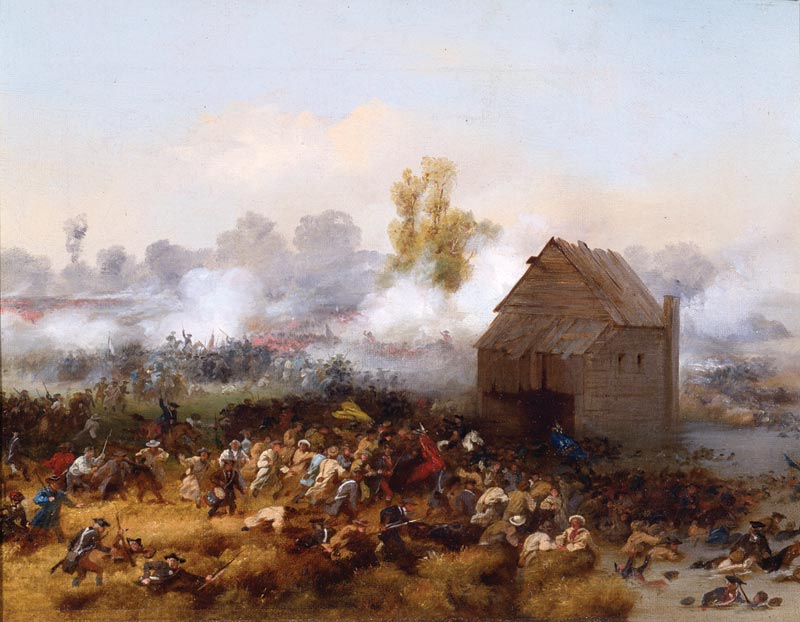
Like the Continentals fleeing Brooklyn Heights the Justice Department has retreated from the objection to Georgia’s plan to ensure that only citizens are allowed to register to vote.  The Atlanta Journal Constitution has more.

This was a bad objection in the first place, and someone finally got involved who understood it and blew the retreat. 

Another explanation for the retreat is that it pays to fight back.   The DOJ objected in May 2009 to Georgia’s plan to verify citizenship of voter registrants.  Dickering and more dickering characterized the next 13 months – until Georgia fought back and sued in July 2010.  It shows that with Section 5 objections, states should bypass the Department and go straight to United States District Court where usually sound jurists will determine the outcome in the light of day, and not behind closed doors.  Jurisdictions should understand that Georgia probably spent less to file the lawsuit to obtain preclearance than they did dickering for 13 months.

A side note to the retreat, then-Assistant Attorney General Loretta King interposed this objection a few days after she ordered the dismissal of the New Black Panther case. 

Fox article on military voting and states seeking waivers

Fox had multiple stories Sunday.  Here is one.

“Also on America’s News HQ, Eversole called out Secretary Buescher and the efforts of his underlings, suggesting that the Centennial State isn’t giving it their all. “We’ve got to find a better excuse or reason not to comply with the Move Act than the fact that it takes 15 days to print ballots,” Eversole said, visibly exasperated. “Walk down to Kinkos, put it in the copier, print them, and get them to troops so they have time to vote.””

Senator John Cornyn spoke about efforts to keep the waiver process secret within the Department of Defense and the Department of Justice:

“I worry because there is not the kind of transparency that we can judge for ourselves whether it’s being used as an excuse to block military voting or whether there are legitimate problems,” Sen. Cornyn told Fox News. “If there are legitimate problems then we want to work to try and overcome those obstacles not maintain them.”

The fact is that the higher ups in the Pentagon are ordering that the process be kept secret because of how embarrassing this may be to the adminstration if any waivers are granted.  The plan is to grant some waivers before the public has time to scrutinize the merits of any of the waiver requests.  The Justice Department is also planning to keep its report on the waivers secret.  That way the public will not be able to judge the merits of the DOJ advice and also the level of zeal Eric Holder has in protecting military voters.   Unless the public demands transparency and accountability, don’t expect anything to change.